
Understanding Your Options for Avoiding an Electrical Upgrade
If you’re adding an EV charger, heat pump, hot tub, or another large appliance, you may have heard that you need an electrical panel or service upgrade first.
That can cost up to $15,000 or more, especially in older homes, multifamily buildings, or homes with underground service.
The good news: you have more options than you think to help your home use electricity more intelligently so you can often add new appliances without upgrading your service.
Here’s a simple breakdown of the most common options available today:
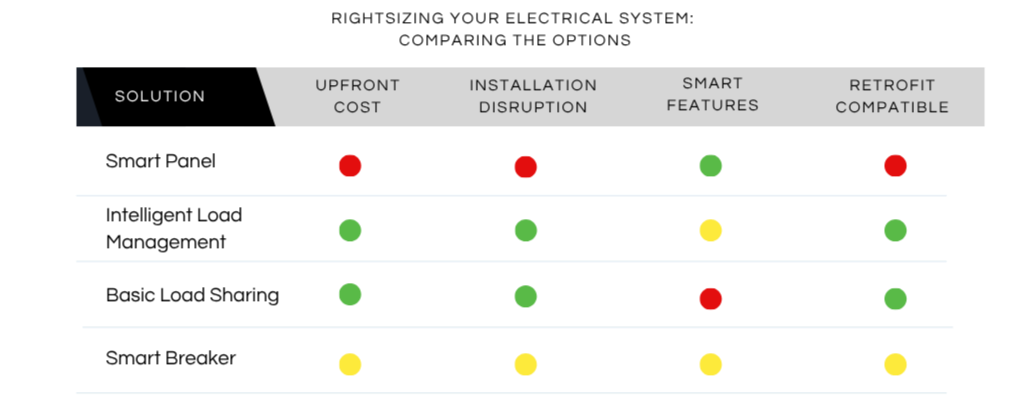
1. Smart panels
Whole-home panel replacement with integrated controls
A smart panel is a complete replacement for your existing electrical panel. Think of it as turning your electrical panel into a “smart home hub” for energy. These systems can:
Track energy use
Control individual circuits
Connect to apps
Automate parts of your home’s energy usage
Smart panels offer the most features, but they also tend to be the most expensive option because they require replacing the entire panel.They may also require more wall space, which can make installation harder in older homes.
Best for: Homeowners doing a major renovation and/ or want circuit level data on every appliance in the home.
2. Intelligent Load Management
Circuit-level controllers that dynamically manage large loads
Smart circuit controllers are designed to offer a balance between affordability, simplicity, and intelligent energy management.
These devices sit between your panel and a major appliance, like an EV charger or heat pump.
Unlike smart panels, they don’t require replacing your current panel, they work with it to make it smart by monitoring your home’s overall energy usage and only adjust a major appliance when your home is approaching its electrical limit.
Most of the time, everything operates normally. The system only steps in during short periods of unusually high demand.
For many homeowners, this creates a practical middle ground:
Lower installation cost
Minimal disruption to the home
Works with most existing electrical panels
Compatible with many 240V appliances
Adds visibility into home energy usage
Unlike full smart panels, they don’t require replacing your entire electrical system. And unlike simpler switching solutions, they coordinate usage based on what the whole home is actually doing.
Best for: Homeowners looking for a practical, lower-cost way to add new appliances without replacing their electrical panel and/ or want whole home energy usage data. Get in touch to learn more.
3. Smart Breakers
Breaker-level monitoring and control systems
Smart breakers replace individual breakers – those little switches inside your panel. They can monitor usage and automatically shut off certain appliances if your home is approaching its electrical limit.
The challenge is compatibility. Many smart breakers only work with specific panel brands, which can limit flexibility for older homes.
Some systems may also require manual resetting or appliance restart behavior after a load management event.
Best for: Homes that already have a compatible newer panel.
4. Basic Load Sharing
Simple circuit splitters and appliance-sharing devices
Circuit splitters are another lower-cost option. These devices connect two appliances to the same circuit and automatically switch between them.
For example:
Your EV charger runs
Your dryer pauses
Then the dryer resumes later
This works well in some situations, especially when two appliances are rarely needed at the same time.
Best for: Simple situations where two appliances can easily share usage time.
What is the difference between intelligent load management and simple load share?
The main difference between intelligent load management and simple load share is how they manage energy usage.
A simple load share switches between two specific appliances no matter what the rest of the home is doing.
An intelligent load manager (like Stepwise) monitors the entire home and only adjusts usage when the house is actually approaching its electrical limit. If you want a smoother experience and flexibility for future electrification projects, this is the preferred option.
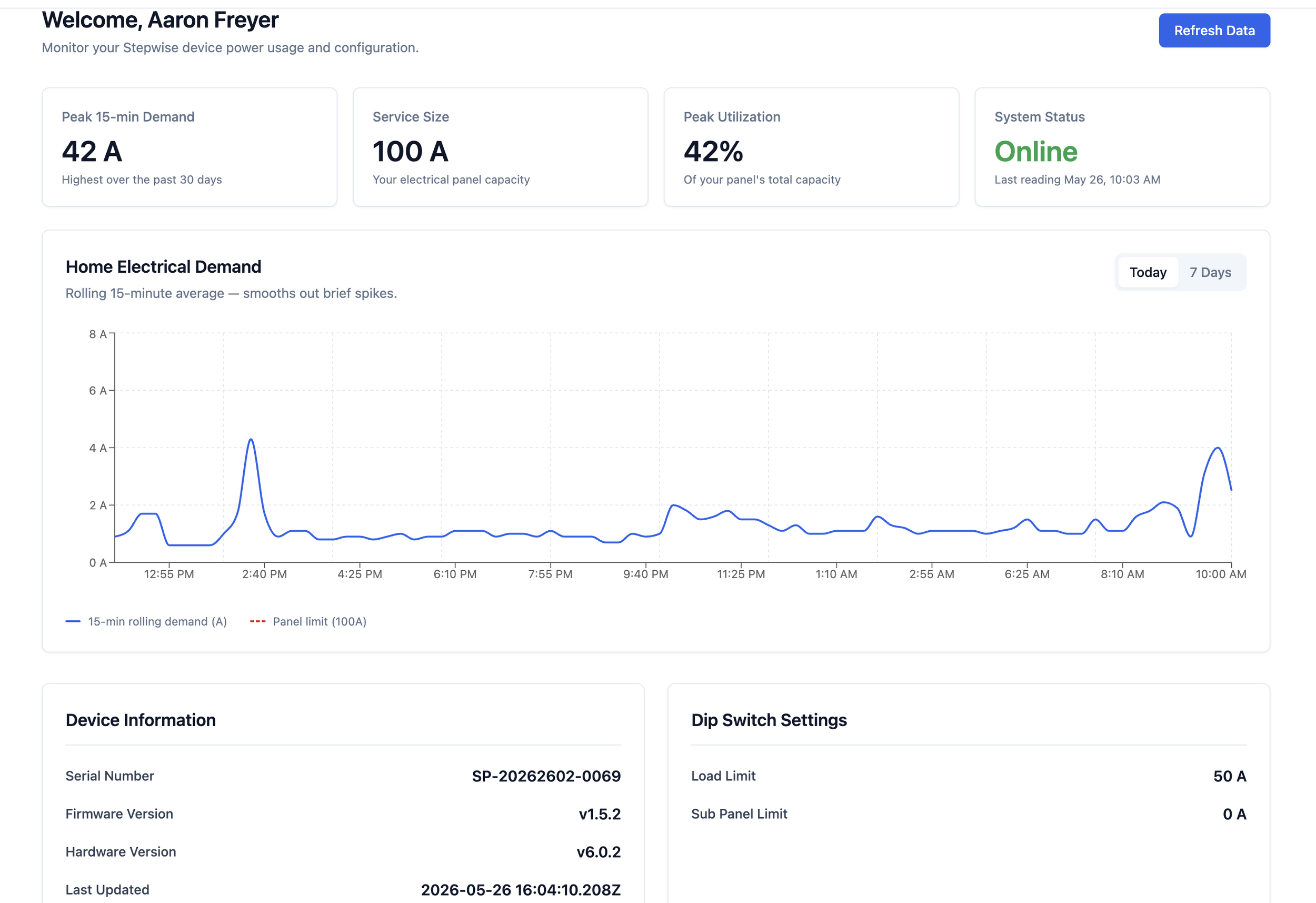
Example of energy dashboard that Stepwise offers to inform you of the available capacity in your home
Which Option Is Right for You?
While there’s no one-size-fits-all answer, many homeowners prefer intelligent load management solutions as a practical middle ground between expensive panel replacements and simpler appliance-sharing setups.
To determine the best solution for you, consider:
Your home’s electrical setup
Your budget
Whether you plan to electrify more appliances later
How much visibility and control you want
As more homes add EV chargers, heat pumps, and other large electric loads, load management is becoming an increasingly important tool for rightsizing home electrification without automatically overbuilding electrical infrastructure.
Want to learn more? Get in touch.